A stablecoin card programme is only as solvent as the company sitting between the wallet and the card network. On 29 July 2026, roughly 120,000 cards stopped working at checkout when Paris-based issuing platform Kulipa wound down — about four months after announcing a funded seed round. The failure is a useful, uncomfortable lesson in where the risk in crypto payments actually sits.
Key takeaways
- Kulipa, a stablecoin card issuing platform, ceased operations on 29 July 2026, citing solvency problems.
- Around 120,000 cards across roughly 20 wallet and fintech clients — including Solflare and Ready — stopped functioning abruptly.
- The shutdown came about four months after a $6.2m seed round co-led by Flourish Ventures and 1kx, bringing total funding to about $9.2m.
- Solflare users kept their funds because the card pulled from self-custody wallets at the point of sale, with no balance held at the issuer.
- The failure mode was corporate solvency, not blockchain risk — and architecture, not luck, determined who was exposed.
In short: Kulipa provided the card-issuing infrastructure behind roughly 120,000 crypto-linked payment cards. When it wound down over solvency issues, every card built on it stopped working. Customers of partners that used a self-custody model retained full access to their assets, because the issuer never held their funds.
What happened to the Kulipa stablecoin card programme
Kulipa sat in an unglamorous but critical position: the issuer-processor layer that lets a wallet app offer a card while settlement happens in stablecoins behind the scenes. Wallets integrate one API; Kulipa handled issuing, authorisation and network settlement.
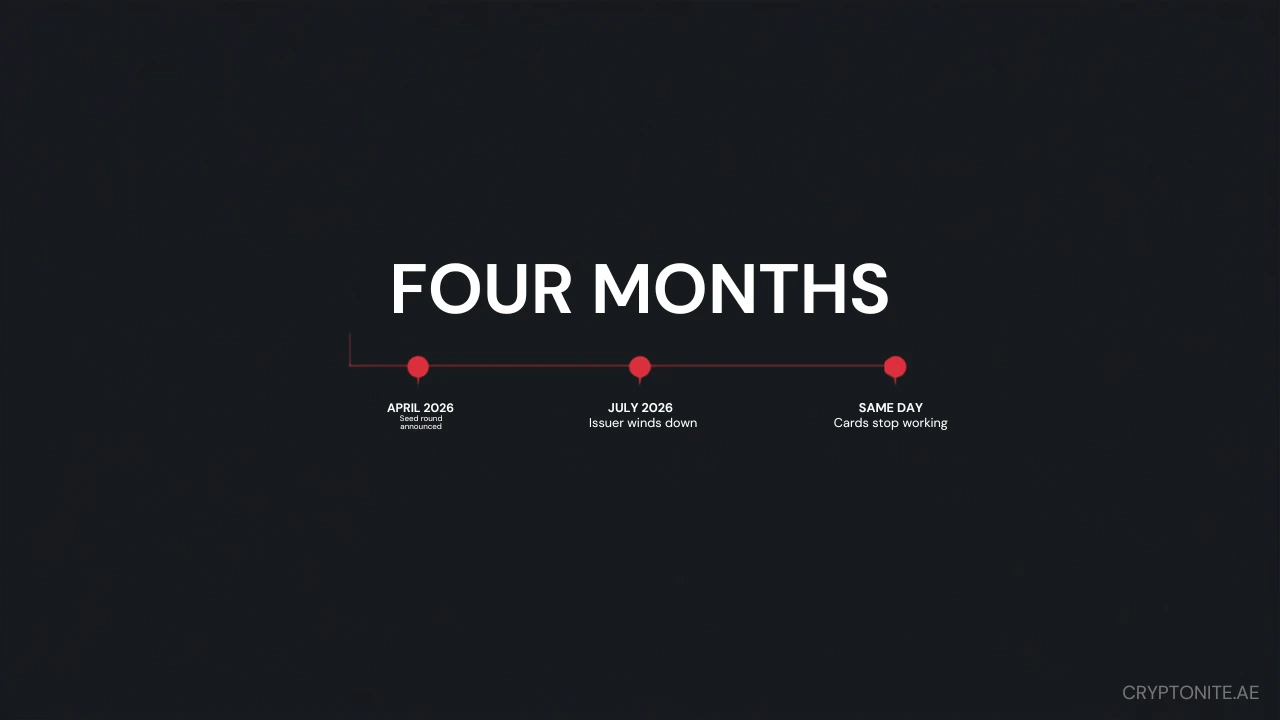
The company had raised a $6.2m seed round announced in early April 2026, co-led by Flourish Ventures and 1kx with participation from White Star Capital and Fabric Ventures, as reported by The Block. Total funding stood at roughly $9.2m. Fewer than four months later, partners were told the business could no longer support their programmes.
Solflare co-founder Vidor confirmed publicly that the wallet’s card partner was winding down due to solvency issues and that cards had stopped working the same day. The abruptness matters: cardholders discovered the failure at points of sale rather than through advance notice.
Why did some users lose access and others lose nothing?
This is the part of the story worth keeping. Crypto card products broadly split into two designs, and the difference is invisible to users until something breaks.
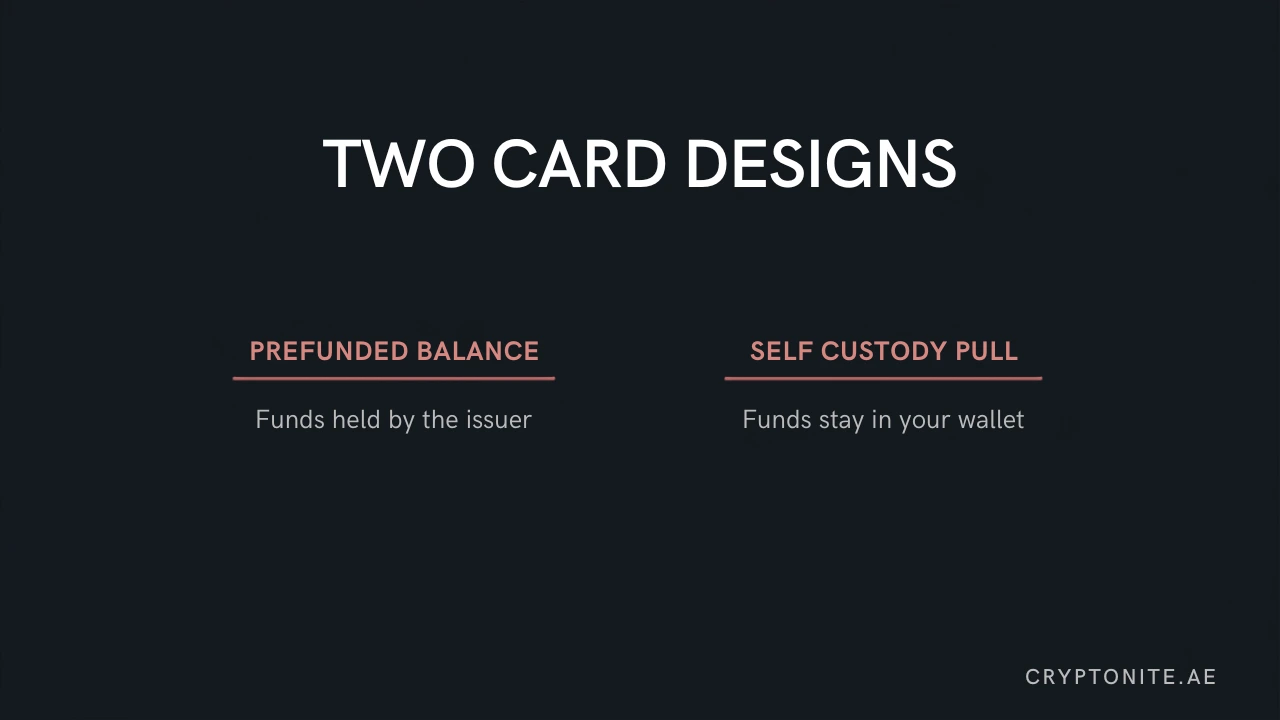
| Design | Where funds sit before a purchase | Exposure if the issuer fails |
|---|---|---|
| Prefunded / top-up model | A balance held by the issuer or its partner | User funds are a claim on a failed company |
| Self-custody pull model | The user’s own wallet, until the moment of authorisation | Card stops working; assets remain untouched |
Solflare used the second design. Spending was debited directly from the user’s self-custody wallet at authorisation, so no customer balance ever accumulated at Kulipa. When the issuer failed, the product died but the money did not move. Solflare has said a replacement card is in development with Apple Pay and Google Pay support.
One caveat: a self-custody pull model is not a guarantee against all loss. It removes issuer custody risk specifically. Pending authorisations, disputed transactions and refunds in flight at the moment of a shutdown remain messy, and users of other Kulipa partners may have had different arrangements that have not been publicly detailed.
What this means
The industry narrative for two years has been that stablecoin payments are close to solved — cheap settlement, instant finality, a card on top for the last mile. Kulipa is a reminder that the last mile is still a regulated, capital-intensive, low-margin business governed by card-network economics, not blockchain economics. Settlement being programmable does nothing for an issuer that cannot fund its float.
The second-order point is concentration. Roughly 20 consumer products failed simultaneously because they shared one vendor. That is the same single-point-of-failure pattern that traditional fintech spent a decade learning to hedge with dual issuing partners. Crypto card programmes have mostly not done that, largely because there are few alternatives at their scale.
For the Gulf, where dirham-linked settlement and regulated crypto payment rails are expanding quickly, the practical read is that issuer diligence deserves the same scrutiny as reserve attestations. A stablecoin card is a stack of counterparties, and the weakest one is rarely the token. Regional programmes launching under Central Bank of the UAE payment licensing at least sit inside a supervised perimeter — a structural advantage over lightly regulated venture-funded issuers, though not an immunity.
Nothing here argues against stablecoin cards. It argues for asking which of the two designs above a given card uses, and who else depends on the same issuer. For context on how quickly this infrastructure layer has been forming, see our 2026 stablecoin timeline and coverage of the Open USD launch.
Frequently asked questions
Did Kulipa cardholders lose their money?
Solflare stated that its users’ funds were unaffected because its card debited directly from self-custody wallets at the point of purchase, so no balances were held by Kulipa. Arrangements at other partner products have not all been publicly detailed, so cardholders should confirm status directly with their wallet provider.
What should users check before choosing a stablecoin card?
The key question is whether the card requires topping up a balance held by a third party, or pulls directly from a wallet the user controls at authorisation. The second design removes issuer custody risk. It is also worth asking who the underlying issuer-processor is and whether the provider has a backup.
Was this a blockchain or smart contract failure?
No. The reported cause was corporate solvency at the card issuing company. The blockchain settlement layer and the stablecoins involved continued to function normally throughout.
This article is for informational purposes only and does not constitute financial, investment, or legal advice.
By Vaibhavv Ali