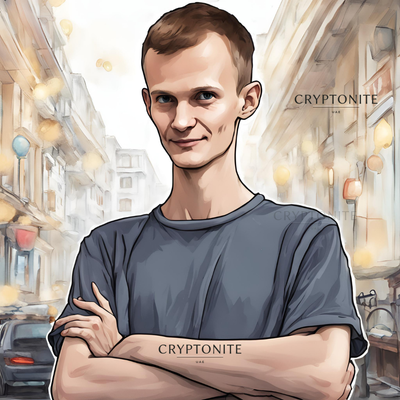
Vitalik Buterin, co-founder of Ethereum, recently voiced his support for an announcement made by engineer Haofei on the decentralized social media platform Farcaster. Haofei revealed plans for the platform to make “Likes” private, a move aimed at addressing issues of preference falsification, where users may misrepresent their true preferences due to social pressure or fear.
Buterin elaborated on this idea on May 20, suggesting that Farcaster could implement zero-knowledge (ZK) likes to ensure user privacy. Zero-knowledge technology allows one party to prove the truth of a statement to another without revealing any confidential information. In the context of Farcaster, ZK likes would enable users to prove they liked a post without disclosing their identity.
Buterin proposed leveraging ZK technology from Zupoll, a tool used within his initiative, Zuzalu, which focuses on decentralization and cryptography for anonymous voting and poll decision-making.
This suggestion aligns with Farcaster’s principles of prioritizing user privacy, censorship resistance, autonomy, and differentiation from centralized social media platforms.
Responding to rumors about Farcaster potentially hiding users’ likes by default, Haofei confirmed the platform’s intention to make likes private. Haofei explained that public likes often incentivize undesirable behavior, such as reluctance to like “edgy” content due to fear of backlash or damage to one’s public image.
Haofei assured users that they would soon be able to like posts without concerns about visibility and emphasized that increased liking activity would improve the algorithm’s performance.
Community reactions to the announcement varied. Some users suggested extending the privacy concept to other features like following, while others, including prominent accounts like Wall Street Silver, offered differing opinions.
In addition to advocating for ZK cryptography, Buterin has proposed solutions to mitigate the issue of miner extracted value (MEV). MEV strategies allow validators to profit by manipulating transactions within a block to exploit arbitrage opportunities, which can lead to network congestion, increased trader slippage, and higher gas fees.
To address this, Buterin recommended MEV minimization techniques such as quarantine, the use of inclusion lists, and reducing the requirements to run a node.
May 2024, Cryptoniteuae
