The CLARITY Act will not pass in 2026. That is a forecast rather than a fact, and it deserves to be argued rather than asserted — but after the US Senate left for its August recess without ever filing cloture, the case for passage this year has become considerably harder to make than the case against it. The obstacles are no longer technical. They are political, and political obstacles do not resolve on a legislative calendar.
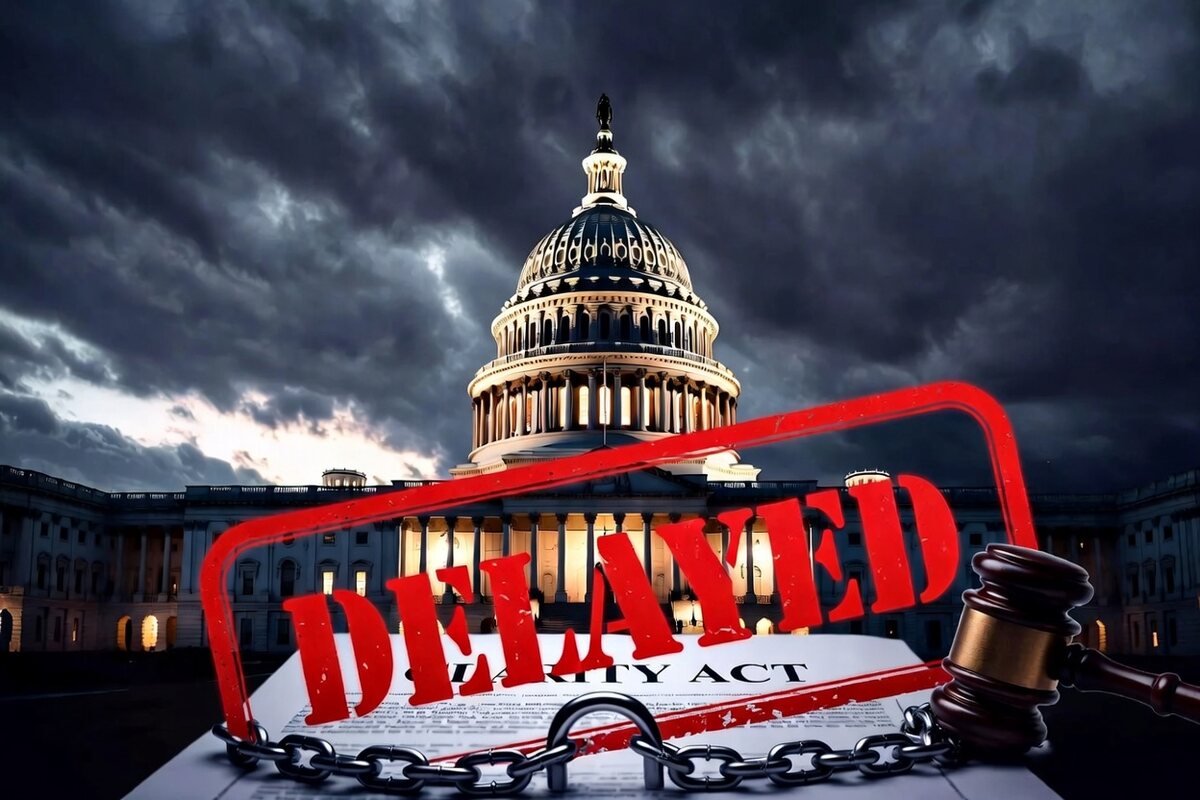
Key takeaways: the SEC and CFTC largely agree on the substance, so drafting is not the blocker; the ethics section covering officeholders’ digital asset interests is; cloture needs 60 votes and roughly seven Democrats have publicly said the text falls short; the September window is short and runs into midterm campaigning; and if the House changes hands in November, meaningful market-structure reform could be pushed past the 2028 presidential cycle.
1. It has become a pure political football
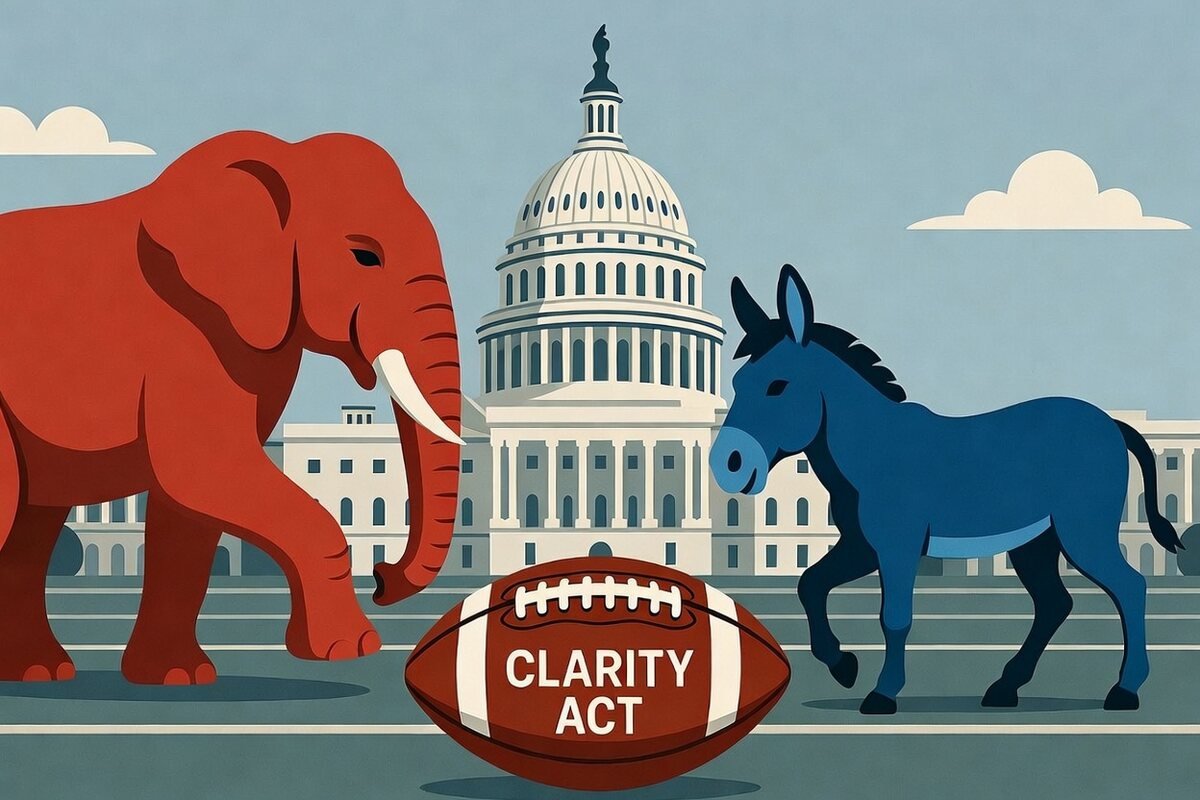
The most honest description of the current impasse is the least technical one. Democrats have little incentive to hand the White House a signature legislative win months before the midterms, and that incentive does not improve as election day approaches — it worsens.
This was Michael Terpin’s reading when he joined Aura8 Episode 71 with host Vaibhavv Ali: no Democrat wants to be seen giving Trump a win. Even after the White House moved on ethics language, Democratic objections kept finding new footholds. When a bill’s remaining disputes keep relocating rather than closing, the disagreement is usually about something other than the text.
Senate Majority Leader John Thune came close to saying so outright when he confirmed the delay, telling reporters that Democrats were insistent on no CLARITY vote in this window while promising the bill would be queued up first thing when we come back. Leadership does not describe a whip problem in those terms when the remaining gap is drafting.
2. The ethics and conflict-of-interest fight is the real blocker
This is the load-bearing dispute, and it is worth being specific about it rather than gesturing at “partisanship”.
The President’s family has extensive digital asset interests — a memecoin, family-linked ventures, mining exposure — and that created genuine demand for conflict-of-interest rules attached to any market structure statute. Republicans and the White House produced ethics language. Democrats have repeatedly called it insufficient, and their published objections are concrete rather than rhetorical.
Minority staff on the Senate Banking Committee argued in a late-July analysis that the restrictions as drafted would preserve existing arrangements while permitting similarly structured future ventures. The specific complaints reported around the negotiation include: that the provisions do not extend to officials’ adult children; that income from trading fees or reserve assets tied to existing businesses is not clearly prohibited; that enforcement sits solely with the Department of Justice — an agency the President controls — rather than with state or private enforcement; and that the section sunsets on 20 January 2029, when the current administration leaves office.
A group of Senate Democrats including Cory Booker, Catherine Cortez Masto, Ruben Gallego and John Hickenlooper stated publicly that the Republican text falls short and that provisions on ethics, consumer protection, illicit finance, conflicts of interest and market integrity must be strengthened. Those are close to the exact senators a 60-vote coalition needs. The White House has countered that Democrats should accept the constraints they already won. Neither side has moved since.
3. The 60-vote threshold plus a shrinking calendar
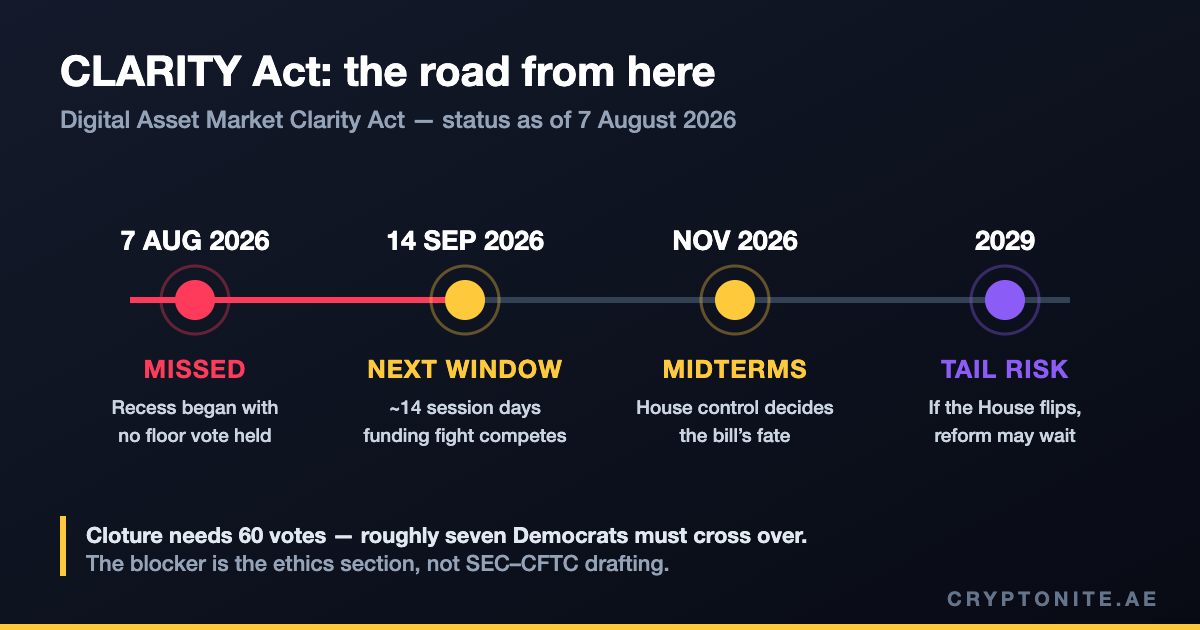
Cloture requires 60 votes. Republicans cannot supply that alone, which means roughly seven Democrats must decide that regulatory clarity outweighs the political cost of crossing over. As long as the ethics section stands where it does, those votes are not available — and leadership has shown no appetite for burning floor days on a cloture vote that fails.
The calendar compounds it. The pre-recess window is gone. The Senate returns on 14 September into a government funding fight, then leaves again in early October and largely stays away through election day. Reporting on the schedule puts the practical number of session days across September and October at roughly 14. A several-hundred-page market structure bill with an unresolved partisan flashpoint does not typically clear 14 contested days unless leadership spends serious capital — and capital is scarcer, not more plentiful, in the final weeks before an election.
4. Post-midterms risk: the road to 2029
If Democrats take the House in November, the current version of the CLARITY Act is unlikely to survive in recognisable form. A new majority would rewrite it, re-litigate the ethics section from a position of strength, or simply decline to prioritise it.
Terpin’s view on Aura8 was that this scenario pushes meaningful market-structure legislation past the 2028 presidential election — which is to say, into 2029. That is not a base case, and it should not be treated as one. But it is a live tail risk, and it is the scenario the industry is least prepared for, because most compliance roadmaps quietly assume a statute arrives within a year or two.
Bitwise chief investment officer Matt Hougan has framed the intermediate danger well: a bill that neither passes nor dies is worse for markets than a clean failure, because professional allocators sit out while the outcome stays live. He has described the risk of CLARITY entering a “walking dead” phase and argued that the cleanest market outcome would be for prediction-market odds to break decisively lower so the question is settled either way.
The best thing that can happen if Clarity doesn’t pass this week is that the Polymarket odds break solidly lower, into the teens at least, so we can put the uncertainty behind us.
Matt Hougan, Chief Investment Officer, Bitwise Asset Management
The case that it still passes
Intellectual honesty requires setting out the other side, because this is a forecast and forecasts fail.
- Thune has publicly committed to bringing it up first when the Senate returns. Majority leaders do not usually make that promise about bills they intend to bury.
- The bill has already cleared the House and survived committee markup. The procedural distance remaining is short compared to the distance already travelled.
- Senator Cynthia Lummis has kept it on the agenda through repeated setbacks, and sponsor persistence has revived bills in worse positions.
- The ethics section is already time-limited. A negotiated extension of that sunset, or a narrow expansion to cover adult children, is a small enough concession to be tradeable.
- Industry pressure is real and well funded, and an election year cuts both ways — some Democrats in crypto-heavy states may prefer a yes vote to explaining a no.
If those forces align in the September window, the argument in this article is wrong. Readers should weigh it accordingly.
Bottom line
The CLARITY Act is no longer stuck on technical disagreements between the SEC and the CFTC — the two agencies have spent 2026 harmonising, and issued a joint interpretation in March following their February memorandum of understanding. It is stuck on politics: partisan incentives before a midterm, an unresolved fight over the President’s crypto interests, a 60-vote threshold that requires opposition votes, and a calendar with almost nothing left in it.
That combination makes passage in 2026 unlikely and opens a genuine path to multi-year delay. For firms building in the United States, the planning assumption should be the existing SEC and CFTC interpretive perimeter, not a statute. For the Gulf, the read-through is unchanged and favourable: as we documented when UAE virtual asset licences passed 100 firms across five regulators, a written and enforceable rulebook is worth more to a compliance officer than a promised one.
This remains a live story. If cloture is filed or a floor agreement emerges after 14 September, the position here changes materially, and we will say so.
Sources: Congress.gov legislative record; CoinDesk; The Hill; The Block; Aura8 Episode 71 with Vaibhavv Ali and Michael Terpin.
This article is analysis and information only, not financial, investment or legal advice. Legislative outcomes are uncertain and the position described here may change. Nothing here is a price prediction or a recommendation to buy or sell any asset. Always do your own research and consult a licensed professional before acting.