HelloMinds agentic AI – An Aura8 – CryptoniteUAE fireside chat with Minds by Animoca Brands lays out the unglamorous case for agentic AI — built on live examples, not lambo promises.
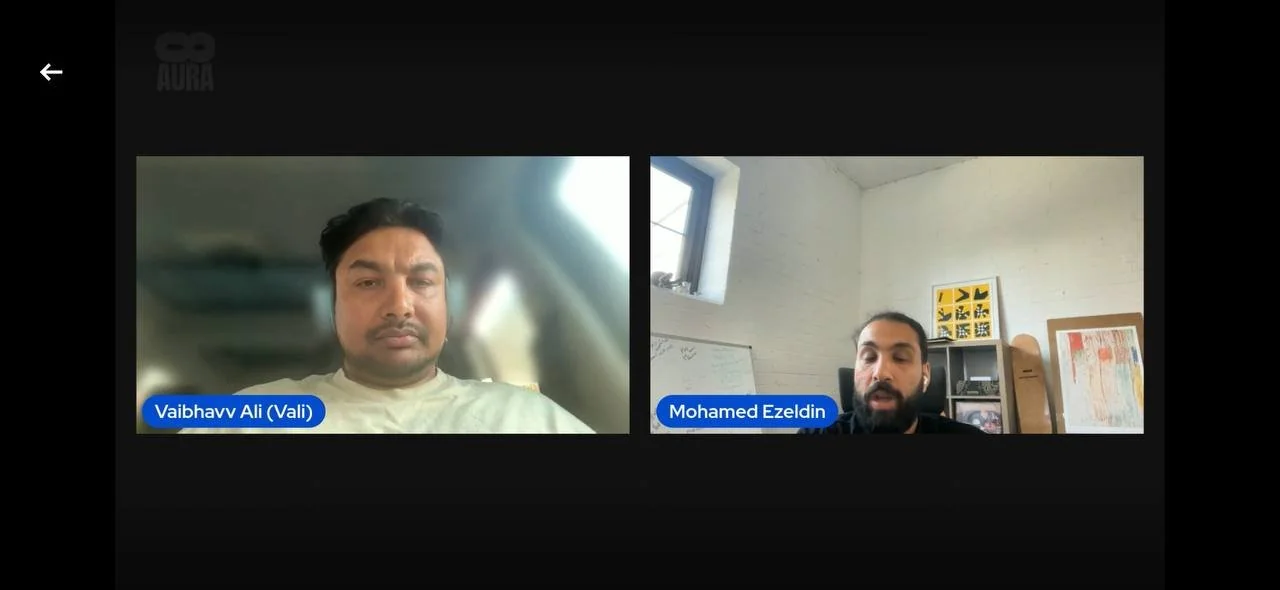
There is a particular kind of credibility that comes from a founder showing you their own agent’s inbox instead of a pitch deck. That’s roughly what happened on the latest CryptoniteUAE fireside chat, where our host Vaibhavv Ali sat down — technical hiccups, wind noise, and all — with Mohamed Ezeldin behind HelloMinds, Animoca Brands’ agentic AI platform, for a second round of conversation. The first takeaway: nobody was selling a fantasy. They were opening a laptop.
Meet the Minds Actually Running Things
The conversation didn’t stay theoretical for long, because both sides of the call are already running agents day to day.
On the HelloMinds side, an agent named Joanne started life doing research for a panel discussion and has since evolved into a functioning executive assistant — drafting and sending emails, managing calendar bookings, summarizing an inbox so nothing important slips through, and now coordinating with a marketing partner on fine-tuned agents for different campaign needs.
On the CryptoniteUAE side, our own host runs an outreach agent named Mimi, tasked with securing media partnerships for events. Mimi handled full email negotiations independently — sending out the media kit, receiving the counterpart’s kit, and closing confirmations — surfacing partnership opportunities the team wasn’t actively chasing. There’s also Rocky, an accountability-focused agent built to nudge physical activity, currently switched off but easily reactivated — a small but telling detail about how these platforms are designed: agents can be toggled on and off individually to conserve compute (what HelloMinds calls Cognition Credits) rather than running as an always-on monolith.
The pattern across both examples is the same one HelloMinds’ team kept returning to: persistence. Unlike a standard chatbot session that resets after every exchange, a Mind retains context and can execute a multi-step task — say, fifty outreach emails with follow-ups — without checking back in after every single step. It behaves less like a tool you prompt and more like staff you delegate to.
The Trading Use Case Nobody Fully Expected
One of the more candid admissions from the HelloMinds side was that trading turned out to be a bigger use case than anticipated, particularly inside Web3 communities. The platform’s one-click “Superior Trade” Mind — built through a partnership with an outfit called Superior Trades — breaks algorithmic trading into four stages: strategy formation, backtesting, deployment, and live trade management.
In a live demo, an agent named “Tom to Trade” was given a deliberately minimal instruction: trade the highest-volume tokens on Hyperliquid, with the agent free to choose the optimal setup. Within moments, the agent selected a BTC-USD perpetual based on volume, spread tightness, and open interest, proposed a strategy referencing EMA-50/200 crossovers across multiple timeframes, and returned a risk framework — 1% account risk per trade, a defined max drawdown, all user-configurable. The agent flagged that live execution required linking a Superior Trade API key through the dashboard, with an explicit warning never to paste that key directly into a chat window with the agent itself, since doing so would expose it.
Backtesting now runs across twelve months of historical data rather than three, and the agent can also parse a trader’s public setup or thesis shared as a link and adapt it — useful for anyone following specific traders on X without wanting to manually track every post. The trading Mind currently connects primarily to decentralized exchanges, including Hyperliquid and Aerodrome.
Visa, Hong Kong, and the Bruce Lee Test Case
The most concrete signal of where HelloMinds is pushing next came via its Visa partnership, announced roughly a week before this conversation at the LEAP East conference in Hong Kong. The stated problem being solved is narrower than it sounds: most people hold multiple credit cards and have no real visibility into which rewards actually suit them, while card issuers, despite knowing spending categories, lack the deeper context to surface rewards a specific person would value — lounge access means little to someone who’d rather see fine-dining perks or perfume deals.
Two pilots are live. The first ties persistent agent memory to Visa rewards personalization. The second, more novel pilot enables actual agentic commerce: as of the conversation, a Mind can complete a purchase on a user’s behalf using Visa rewards at a selected Hong Kong merchant — the Bruce Lee Club eShop being the first live storefront, spanning collectibles, apparel, books, and home goods. It’s a small sample size deliberately — a controlled first step toward agents that don’t just recommend a purchase but execute it.
The Boring Businesses Are the Real Opportunity
Where the conversation got most interesting wasn’t the trading bot — it was groceries. HelloMinds is developing agents that can take a photo of a fridge’s contents or a shopping receipt and infer both what’s cookable right now and what needs reordering on a recurring basis, since roughly 80% of a typical household’s shopping basket repeats monthly. Separately, our host described running a personal agent for roughly ninety days whose only job is scanning regional price-comparison services like Dubai’s flyer aggregators alongside Amazon to find the best deal within a set radius — a small, unglamorous task that nonetheless compounds into meaningful household savings over time, particularly for larger families navigating what one side of the conversation bluntly called supermarket pricing as its own science.
The small-business framing extended further. At an Animoca Minds workshop in Dubai roughly ninety days prior, several attendees from traditional, non-technical business backgrounds were initially skeptical — until a sourcing-focused agent, given only the product category and current supplier, returned pricing that implied roughly 20% in potential savings by switching suppliers. That anecdote underpins the platform’s actual thesis: most existing agentic AI tooling still assumes some coding or engineering literacy, while the real addressable market — mom-and-pop shops, five-person operations, small supermarkets — has neither the time nor the budget to hire a dedicated ops or marketing hire. HelloMinds’ stated north star is “radical user-friendliness”: no downloads, no wallets required to start, and agent interaction beginning over ordinary email or Telegram rather than a bespoke interface.
The Ecosystem Layer: Bazaar, Genealogy, and 3,000+ Integrations
Beyond the one-click Minds on the homepage, users can spin up a fully custom agent by describing what they need in plain language — the agent itself will explain what it can do and what integrations it requires. The Minds Bazaar connects agents to a growing library of third-party apps — Canva, TikTok, Google Slides, Zoom, Zoho, YouTube among them — reportedly exceeding 3,000 integrations, abstracting away what used to be a manual, technical setup process.
One of the more unusual builder stories involves a genealogy-research Mind, which Animoca Brands co-founder Yat Siu used to trace distant relatives — a case study the company has documented publicly, including follow-up contact with newly identified relations that confirmed the connection.
The Capital and the Culture
Underpinning all of this is Animoca Brands’ up to $10 million Minds Investment Programme, of which roughly $1 million has already been deployed. The programme isn’t restricted to agentic AI builders specifically — it’s open to any project where Minds meaningfully improves the product or its distribution — and pairs capital with Cognition Credits, technical support, and introductions across Animoca’s 600-plus portfolio companies. For now, the consumer product itself remains free to try: new users get credits across their first several Minds, topped up through the month under a fair-usage policy, a deliberate choice framed as prioritizing product validation over early monetization.
Our host, a repeat guest on the show, also noted something less quantifiable: across multiple conversations with the HelloMinds and Animoca team, the culture has stood out as unusually collaborative for a space frequently criticized for being extractive rather than value-generating toward its community — a criticism levelled at points throughout Web3’s history.
The Honest Caveats
None of this is presented as finished. WhatsApp integration remains a genuine bottleneck across the entire agentic AI industry, not just HelloMinds, given Meta’s tight control over API access as it builds out its own agent ambitions. A mobile app is still in development. And the panel didn’t dodge the harder macro questions either — a candid detour into AI’s real energy costs, and whether some form of universal basic income or heavier taxation on AI-driven productivity gains will be needed as automation compresses the cost of labor, closed out the conversation without pretending there’s a tidy answer yet.
The Takeaway
Strip away the branding and what’s left is a fairly unromantic list: an inbox that manages itself, a trading bot with configurable guardrails, a rewards engine that actually knows what you like, and a sourcing agent that found a small business owner a cheaper supplier. None of it is science fiction. All of it is still early. But for a sector that has spent two cycles promising autonomy and mostly delivering dashboards, a platform whose best demo is “watch my assistant close a partnership deal while I sleep” is worth paying attention to — quietly, and without the sunglasses required.

2 thoughts on “HelloMinds: Agentic AI That Trades, Sells, and Ops”