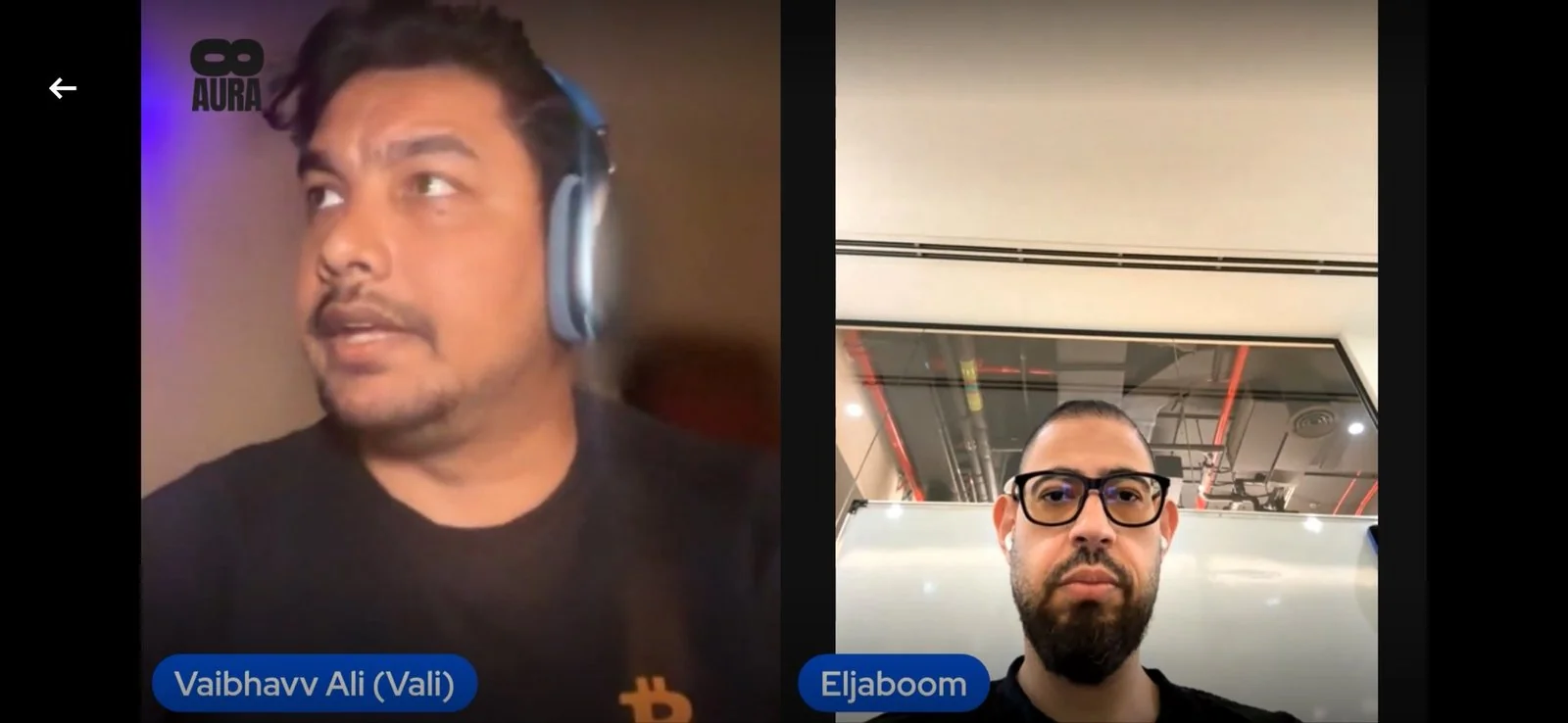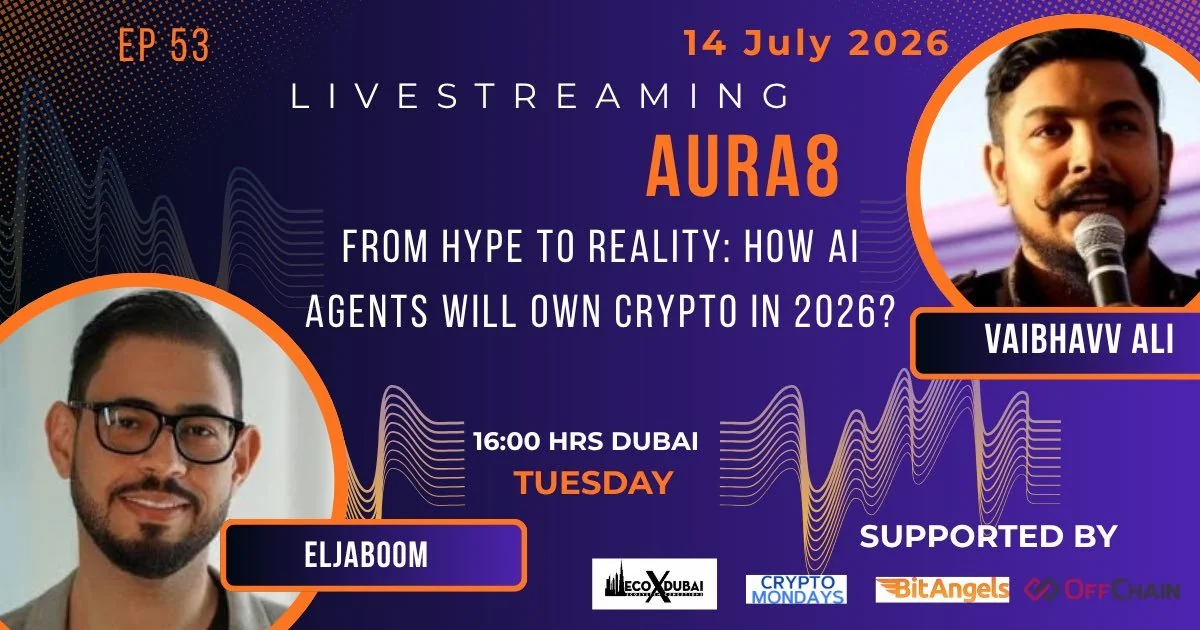
Eljaboom Binance interview- Eljaboom BNB Early investor- On the day Binance turned nine, one of BNB’s earliest backers, the pseudonymous investor known as Eljaboom, sat down with Vaibhavv Ali to deliver a blunt verdict on the state of crypto: the casino-style speculation that defined the last several cycles is fading, altcoin season may never have really happened, and the next winners will look more like regulated, revenue-generating businesses than meme-fueled token launches. Along the way, Eljaboom revealed he personally covered a roughly $135,000 refund after a project he was promoting got rug-pulled by its own developer, disclosed he lost more than $90 million in a single BNB Chain flash-loan exploit years ago, and predicted crypto’s next frontier for human settlement is the Moon, not Mars.
Binance marked its ninth year in business having grown from what its own leadership has called a scrappy 2017 launch into a platform claiming roughly 300-plus million users, with a long-term target of onboarding as many as three billion people globally. To mark the occasion, Ali — a Dubai-based media personality and host of The Coincidental Podcast — brought on Eljaboom, an investor who says he bought BNB for under a dollar and never sold, to reflect on nearly a decade of the exchange’s evolution.
The Conviction Bet: Buying BNB Under $1
Eljaboom said his early bet on BNB came down to three things: his read on Binance founder Changpeng “CZ” Zhao’s character and industry track record, Binance’s decision to build an EVM-compatible chain rather than launch a standalone token, and the underlying validator mechanics of what was then called Binance Smart Chain. He described himself as an “extra bit of a diamond hand” — someone who has held the asset through nearly every market cycle since — while cautioning that blind long-term holding isn’t advice he’d generally give other investors, who he said should typically take profit and leave only a smaller position to run.
He was candid that his enthusiasm for the broader industry has cooled even as his BNB position hasn’t. In his view, crypto over the past year has increasingly resembled a casino rather than a venue for utility-driven projects, and he argued the space’s more durable next chapter lies in tokenized, dividend-generating real-world assets rather than speculative altcoins.
On CZ’s Legal Troubles: “He Calculated the Risk”
Asked directly whether CZ’s punishment in the U.S. anti-money-laundering and KYC case was harsher than penalties handed to traditional banks for similar compliance failures, Eljaboom didn’t dodge the comparison. He argued that CZ’s outcome was disproportionately severe relative to peers, but attributed that partly to Binance’s outsized scale and CZ’s own awareness that operating at the industry’s frontier carried legal risk. He also pointed out that CZ chose to travel to the U.S. and face the proceedings in person rather than avoid them — something Eljaboom framed as a sign of accountability, while still acknowledging mistakes were made.
The $135,000 Refund
The interview’s most personal moment came when Ali asked about a presale Eljaboom had promoted that collapsed after the project’s developer allegedly absconded with investor funds. Rather than let retail buyers absorb the loss, Eljaboom said he personally wired the equivalent of the raised amount — around $135,000 — back to the presale platform to refund every participant, despite having no legal obligation to do so. He described it less as generosity than as a need to “get it off his head,” framing the decision as consistent with a broader philosophy of gratitude he says has carried him through his own losses, including a flash-loan exploit years earlier that wiped out more than $90 million of his holdings in a matter of hours.
Why He Thinks New Token Launches Are a Bad Bet in 2026
Perhaps the most consequential claim in the conversation was Eljaboom’s warning to founders: in his assessment, launching a new token in the current market is comparable to advising a young developer to learn a dying programming language. He argued that the industry lacks the fresh retail liquidity that fueled every prior cycle’s altcoin rallies, and that the last cycle never produced a genuine “alt season” — what looked like one, he said, was largely capital rotating through meme coins rather than new money entering the market.
His recommendation to builders: skip token presales and SAFT rounds entirely, raise through traditional pre-seed and seed equity instead, and only introduce a token once the underlying business is already generating revenue that beats what a bank account would pay. At that point, he argued, a token becomes a distribution and exposure tool rather than the core fundraising mechanism — a path he said increasingly points toward IPOs and security tokens rather than pure utility tokens, particularly as U.S. regulatory posture shifts.
He also placed blame for altcoins’ struggles partly on exchange listing economics, describing listing fees that can range from roughly $100,000 on smaller platforms to several million dollars on top-tier exchanges — costs he said many legitimately built projects simply cannot absorb while still funding product development.
RWAs, AI Infrastructure, and the “Moon, Not Mars” Prediction
Asked where he sees the next major opportunity, Eljaboom pointed to AI infrastructure and enterprise AI tooling as the most capital-intensive frontier today, while cautioning that real-world-asset tokenization remains more buzzword than functioning market — hampered, in his view, primarily by fragmented global regulation rather than lack of investor appetite. He said he has personally put a small amount of capital into tokenized real estate as an experiment, without yet seeing dividend returns.
In a wide-ranging closing segment, Eljaboom also discussed a nearly year-long project he’s building with partners in Japan: what he described as infrastructure allowing AI agents to negotiate and transact directly with one another — from matchmaking to business deal execution — without human intermediaries. He predicted practical results are still roughly two years away.
He closed with an unprompted claim that space settlement efforts are misdirected: in his view, the Moon rather than Mars represents the more viable near-term destination for human habitation, citing gravity and environmental factors, and said he expects developments on that front within the next few years.
Bottom Line
Nine years after its founding, Binance’s own growth story — from a scrappy 2017 startup to a platform with hundreds of millions of users and ambitions to reach billions more — was almost a backdrop to a more pointed message from one of its earliest true believers: the easy-money, launch-a-token-and-pray era of crypto is closing, exchanges are increasingly behaving like forex platforms, and the founders who survive the next cycle will look a lot more like traditional operators than crypto natives chasing a fast raise.