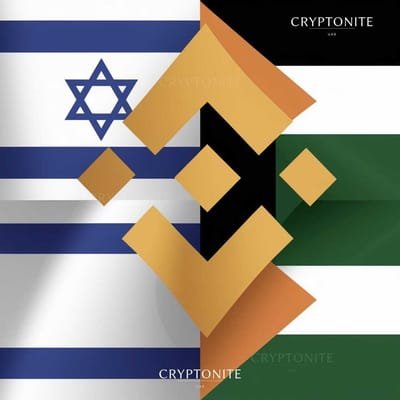
In a controversial move, Binance, one of the world’s largest cryptocurrency exchanges, has seized all funds belonging to Palestinian users following a request from the Israeli Defense Forces (IDF). The exchange’s decision, which has resulted in the freezing of Palestinian accounts and denial of all appeals, has sparked significant backlash and raised concerns about the security and neutrality of centralized crypto exchanges.
The Seizure and Its Basis
The seizure of Palestinian funds by Binance is reportedly linked to Israeli law, specifically the Anti-Terrorism Law of 2016. This legislation grants Israel’s Minister of Defense extensive powers to confiscate property associated with terrorism. The seizure order, identified as T56/23, was signed on November 1, 2023, under this law.
The official claim is that certain cryptocurrency wallets, including those held by Palestinians, have been connected to funds received from a group that Israel designates as a terrorist organization—the Dubai Exchange Company operating in Gaza. This group was flagged by Israeli authorities in 2022.
Binance’s Position and Responses
Ray Youssef, a prominent figure in the cryptocurrency space, has publicly criticized Binance’s actions. He claims that Binance has refused to return the seized funds and that all appeals from affected Palestinians have been denied. According to Youssef, the Anti-Terrorism Law’s provisions justify the freezing and holding of Palestinian funds, given the alleged connection to a declared terrorist organization.
Youssef expressed deep concern over the implications of Binance’s decision, stating:
“According to the anti-terrorism law, cryptocurrencies that have been transferred by a declared terrorist organization constitute property of a declared terrorist organization, and cryptocurrency wallets to which it has been transferred.”
He further warned of a broader trend, suggesting that similar measures could be extended to other groups and individuals in Lebanon and Syria. His statement reflects a growing unease about the role of centralized exchanges in enforcing governmental policies and surveillance.
Implications for the Crypto Community
The actions taken by Binance have raised serious questions about the role and trustworthiness of centralized cryptocurrency exchanges. The decision to freeze funds based on external governmental requests underscores a potential shift toward greater government influence and oversight in the crypto space. This development has led to concerns that exchanges might increasingly act as enforcers of state policies, rather than as neutral custodians of digital assets.
The situation highlights the risks associated with holding significant amounts of cryptocurrency on centralized platforms. The principle of “not your keys, not your coins” has gained renewed relevance, emphasizing the importance of personal control over one’s crypto assets and the potential vulnerabilities of relying on centralized exchanges.
The Road Ahead
As the cryptocurrency community reacts to Binance’s actions, it remains to be seen how this case will impact user trust and regulatory practices within the crypto space. The ongoing controversy serves as a reminder of the complex interplay between technology, governance, and individual rights in the evolving landscape of digital finance.
Binance’s response and future actions will be closely monitored by both affected users and the broader crypto community. The situation underscores the need for transparency, fairness, and protection of user rights within the cryptocurrency ecosystem.
For now, affected Palestinians and observers alike are left grappling with the implications of this unprecedented move and the broader consequences it may have for the future of cryptocurrency exchanges and their relationship with government authorities.
August 2024, Cryptoniteuae