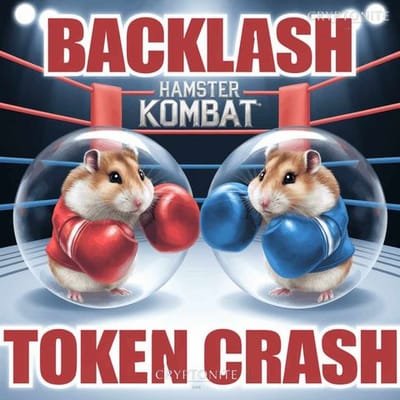
Hamster Kombat, once hailed as the largest mini-game on Telegram with a peak of 300 million accounts, is now facing a sharp decline in both player activity and the value of its native token, HMSTR. The game, which had taken the crypto gaming world by storm earlier this year, has seen its monthly active accounts plummet to just 41 million, a staggering drop from its previous highs.
A Meteoric Rise, Followed by a Rapid Fall
At its peak, Hamster Kombat was celebrated by Telegram CEO Pavel Durov as “the fastest-growing digital service in the world,” a testament to its massive popularity. The game’s growth was bolstered by Telegram’s massive user base of 950 million users, which created a perfect environment for viral adoption. However, what seemed like an unstoppable force has recently shown signs of weakness, and the metrics reflect a concerning trend.
The value of Hamster Kombat’s native token, HMSTR, has dropped by a shocking 76% since late September. The token reached a high of $0.009993 on September 26, but as of now, it is trading at just $0.002392. This significant decline has left many investors and players questioning the game’s future and its economic viability.
Player Backlash and the Impact of Anti-Cheat Measures
A key factor contributing to the downturn in Hamster Kombat’s popularity is player dissatisfaction, particularly among its Nigerian user base. Reports indicate that delays in token airdrops and the controversial implementation of an anti-cheat system have led to widespread frustration.
Earlier this year, the game introduced a new anti-cheat system designed to crack down on fraudulent activity and bots. While this system was intended to maintain the integrity of the game, it has led to the banning of millions of accounts. According to reports, approximately 2.3 million users were banned, with 6.8 billion HMSTR tokens being confiscated in the process. Many players have complained about the perceived unfairness of these actions, claiming that legitimate users were wrongfully punished.
The bans and confiscations have sparked outrage, particularly in regions like Nigeria, where a large portion of the game’s player base resides. Many users claim that they were unfairly disqualified due to technical glitches or misidentifications by the anti-cheat system. As a result, the game’s reputation has taken a significant hit, leading to a further decline in engagement and trust among its community.
The Future of Hamster Kombat
With player trust at an all-time low and the token’s value in freefall, Hamster Kombat is facing a critical crossroads. The game’s developers are now tasked with addressing these grievances to prevent further erosion of its player base and to restore faith in its economic model.
One potential avenue for recovery could be a comprehensive overhaul of the game’s tokenomics, focusing on providing more value to players through rewarding participation and addressing the issues related to the anti-cheat system. Moreover, the team could benefit from enhancing communication with the community, offering transparency around the issues with airdrops, bans, and token confiscations.
However, with the gaming and crypto sectors as volatile as they are, time will tell if Hamster Kombat can turn things around. The game’s success was once seen as a promising case study for blockchain-based gaming on Telegram, but its recent troubles suggest that maintaining such growth is far from guaranteed.
As the game continues to struggle, players, investors, and the wider crypto community will be watching closely to see how the developers respond to these challenges. For now, Hamster Kombat’s future remains uncertain, with much riding on how well it can address the concerns of its increasingly disillusioned user base.
November 2024, Cryptoniteuae