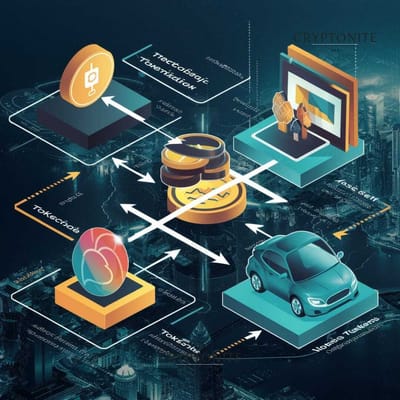
Asset tokenization is a groundbreaking process that leverages blockchain technology to represent ownership rights of real-world assets as digital tokens. These tokens, residing on a blockchain, can signify ownership of a wide array of assets, spanning from tangible assets like real estate, art, and commodities to intangible assets such as stocks, bonds, and intellectual property.
The Mechanics of Asset Tokenization
- Asset Selection: The process commences with the identification of the asset intended for tokenization. This asset could be a single entity, like a piece of artwork, or a collection of assets, such as a portfolio of real estate properties.
- Due Diligence: Rigorous due diligence is performed to ascertain the asset’s value, ownership, and any associated legal or regulatory considerations. This step is crucial to ensure the transparency and legitimacy of the tokenization process.
- Smart Contract Creation: Smart contracts, self-executing agreements with predefined terms stored on a blockchain, are developed to govern the issuance, ownership, and transfer of the tokens. These contracts encode the rights and obligations associated with the asset, ensuring a secure and automated process.
- Token Issuance: The asset is divided into smaller units, each represented by a digital token. The total number of tokens issued corresponds to the asset’s value, enabling fractional ownership and greater accessibility to investors.
- Token Distribution: The tokens are distributed to investors through various mechanisms, including initial coin offerings (ICOs), security token offerings (STOs), or private placements. These tokens can be traded on secondary markets, subject to applicable regulations.
Challenges and Considerations
While asset tokenization holds immense promise, it also faces challenges, including regulatory complexities, standardization issues, and the need for robust technological infrastructure. Additionally, ensuring the security of digital assets and addressing potential risks like hacking and fraud are crucial considerations.
The Future of Asset Tokenization
The future of asset tokenization is bright, with potential applications across various industries. As blockchain technology matures and regulatory frameworks evolve, we can expect to witness increased adoption and innovation in this field. The democratization of investment opportunities, enhanced liquidity, and improved efficiency offered by asset tokenization are poised to revolutionize the way we own and trade assets.
June 2024, Cryptoniteuae