China AI Token Futures – China is taking a major step in the global AI race. According to Reuters, the Shanghai Futures Exchange is in early stages of designing futures contracts for AI tokens — the smallest units of computation processed by large language models. This would turn AI usage and inference costs into a standardized, tradable commodity, similar to oil or electricity futures.
Key Points-
- What Are AI Tokens?
- Details of China’s AI Token Futures Plan
- Why China is Pursuing This Approach
- Comparison with the United States
- Potential Impact on Global AI Markets
- Vaibhavv Ali’s Take
- Final Thoughts
What Are AI Tokens?
AI tokens are the fundamental units of information processed by AI models during inference (when the model generates responses). As AI usage has exploded globally, token consumption has surged dramatically — China alone reached 140 trillion tokens per day by March 2026.
By creating futures on these tokens, China aims to bring transparency, price discovery, and hedging tools to the rapidly growing AI compute economy.
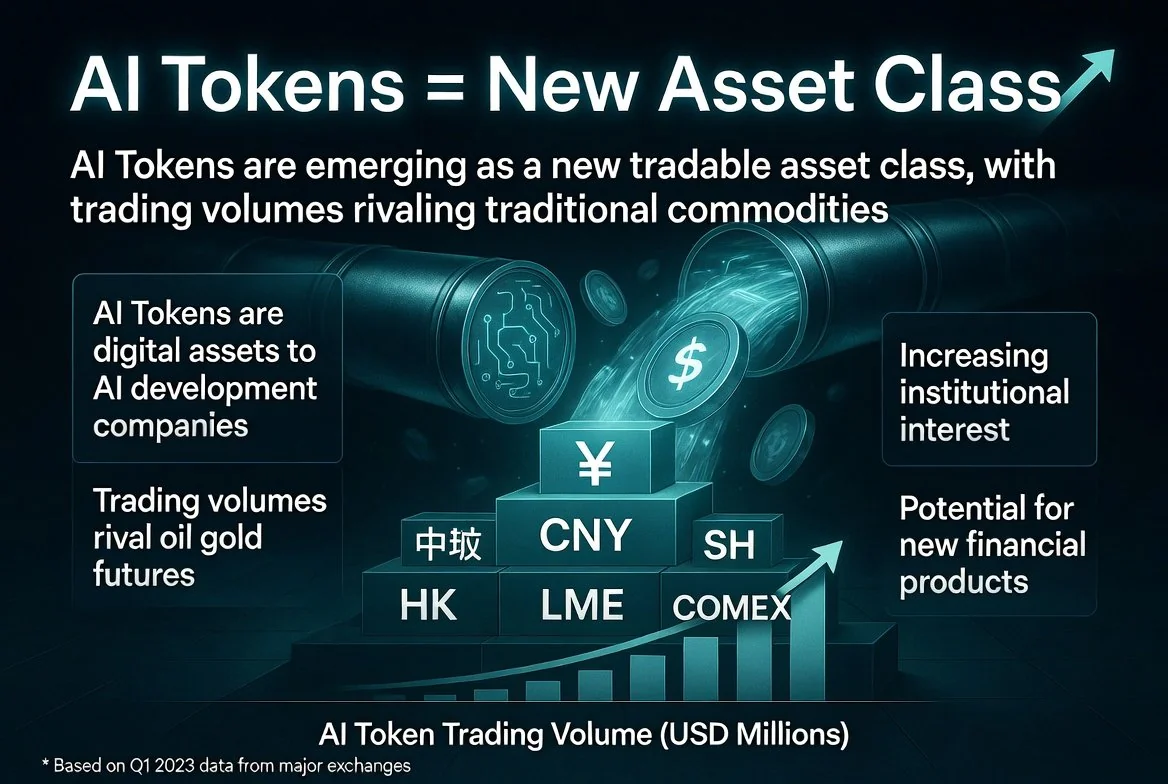
Details of China’s AI Token Futures Plan
- The Shanghai Futures Exchange (SHFE) is leading the design.
- Contracts would be tied directly to AI tokens rather than raw GPU compute power.
- Goal: Allow companies to hedge against volatile AI inference costs.
- This comes as China faces massive demand for compute and looks to standardize pricing in its national computing power network.
The move is part of a broader strategy to treat computing power and AI services as critical national infrastructure.
Why China is Pursuing This Approach
China’s daily token usage has grown over 1,000x since early 2024. With explosive growth in models like Doubao and others, securing stable and predictable compute costs has become a strategic priority.
Futures markets would help:
- Companies hedge price volatility
- Improve capital allocation for AI development
- Strengthen China’s position in the US-China AI competition
Comparison with the United States
While the US (via CME and ICE) is focusing on GPU/compute capacity futures, China is taking a different path by targeting AI tokens themselves. This token-based approach could offer more direct correlation to actual AI service costs and usage.
Potential Impact on Global AI Markets
If successful, China’s AI token futures could:
- Create a new global asset class
- Bring greater price transparency to AI compute
- Influence how companies worldwide manage AI operational costs
- Accelerate the financialization of artificial intelligence
Vaibhavv Ali’s Take (AURA8)
“China turning AI tokens into futures is a masterstroke. They’re not just racing in model development — they’re building the financial infrastructure to support it. This is how nations compete in the AI era: by commoditizing the very atoms of intelligence. The country that best financializes AI compute may end up leading the next decade of innovation.”
Final Thoughts
China’s move to build AI token futures markets signals a maturing understanding that compute is the new oil — and AI tokens are the new barrels. As the world’s AI consumption continues its explosive growth, standardized futures could become essential tools for both developers and enterprises.
The race isn’t just about building better models anymore. It’s about who controls the economics of intelligence itself.
What do you think? Is China ahead in financializing AI, or will US-style compute futures dominate? Drop your thoughts below 👇
Published: May 28, 2026
Author: Sarah Ahmed Co-Host, Aura8 | Co-Founder, Cryptonite.ae Dubai, UAE
X: @0xsfav | Website: www.cryptonite.ae

1 thought on “China AI Token Futures Markets – Turning AI Usage into a Tradable Asset Class”