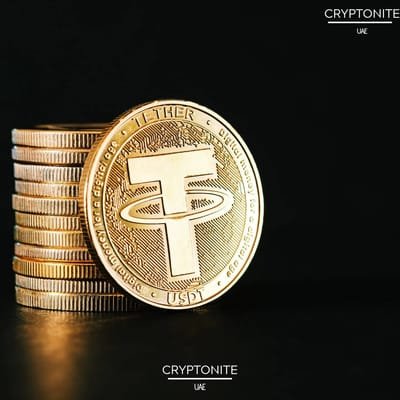
Tether, the dominant force in the stablecoin market, is setting its sights on a significant expansion within the United States, buoyed by the recent easing of crypto regulations. Despite past legal hurdles, the company emphasizes that its core priorities remain growth, expansion, and strategic cooperation.
In a recent July 23rd interview with Bloomberg, Tether CEO Paolo Ardoino outlined ambitious plans for establishing a robust presence on U.S. soil, following the passage of the Guiding and Establishing National Innovation for US Stablecoins (GENIUS) Act. The company aims to introduce a new, regulated stablecoin product specifically tailored for institutional use, encompassing trading infrastructure, bank settlements, and payments.
“We are well in progress of establishing our U.S. domestic strategy,” Ardoino stated. “It’s going to be focused on the U.S. institutional markets, providing an efficient stablecoin for payments but also for interbank settlements and trading.” This strategic pivot aligns with Tether’s ongoing expansion into emerging markets across Latin America, Asia, and Africa, exemplified by its notable relocation to crypto-friendly El Salvador.
Unlike its primary stablecoin rival, USDC, whose parent company Circle went public last month, Ardoino has reiterated Tether’s commitment to remaining private, prioritizing the development of new partnerships.
Navigating the Regulatory Landscape
Tether’s push into the U.S. will necessitate stringent adherence to anti-money laundering (AML) standards and close cooperation with regulatory bodies. The company has a history of legal challenges within the U.S., including an ongoing investigation by the U.S. Justice Department and the Manhattan U.S. Attorney’s office, initiated in 2018, regarding allegations of money laundering, sanctions evasion, or illicit fund transfers. Additionally, a 2019 case concluded with a settlement requiring Tether and Bitfinex to pay an $18.5 million fine and cease operations in New York, though no admission of guilt was made.
Despite these past issues, Tether has recently demonstrated a proactive approach to combating illicit activities. The company was recently praised for freezing $1.6 million tied to terrorist financing within a Gaza-based financial network. Last month, Tether actively assisted the U.S. Department of Justice (DOJ) in dismantling a global “pig butchering” scam. Earlier this year, the T3 Financial Crime Unit (T3 FCU), a collaborative effort between Tether, Tron, and TRM Labs, successfully seized $100 million linked to criminal activities.
CEO Paolo Ardoino underscored Tether’s commitment to transparency in this regard, stating, “Tether’s strength lies in the transparency of blockchain technology and our ability to act decisively when abuse is detected. Unlike traditional financial systems, where illicit flows often go unseen, USDT is traceable, transparent, and accountable.”
July 2025, Cryptoniteuae