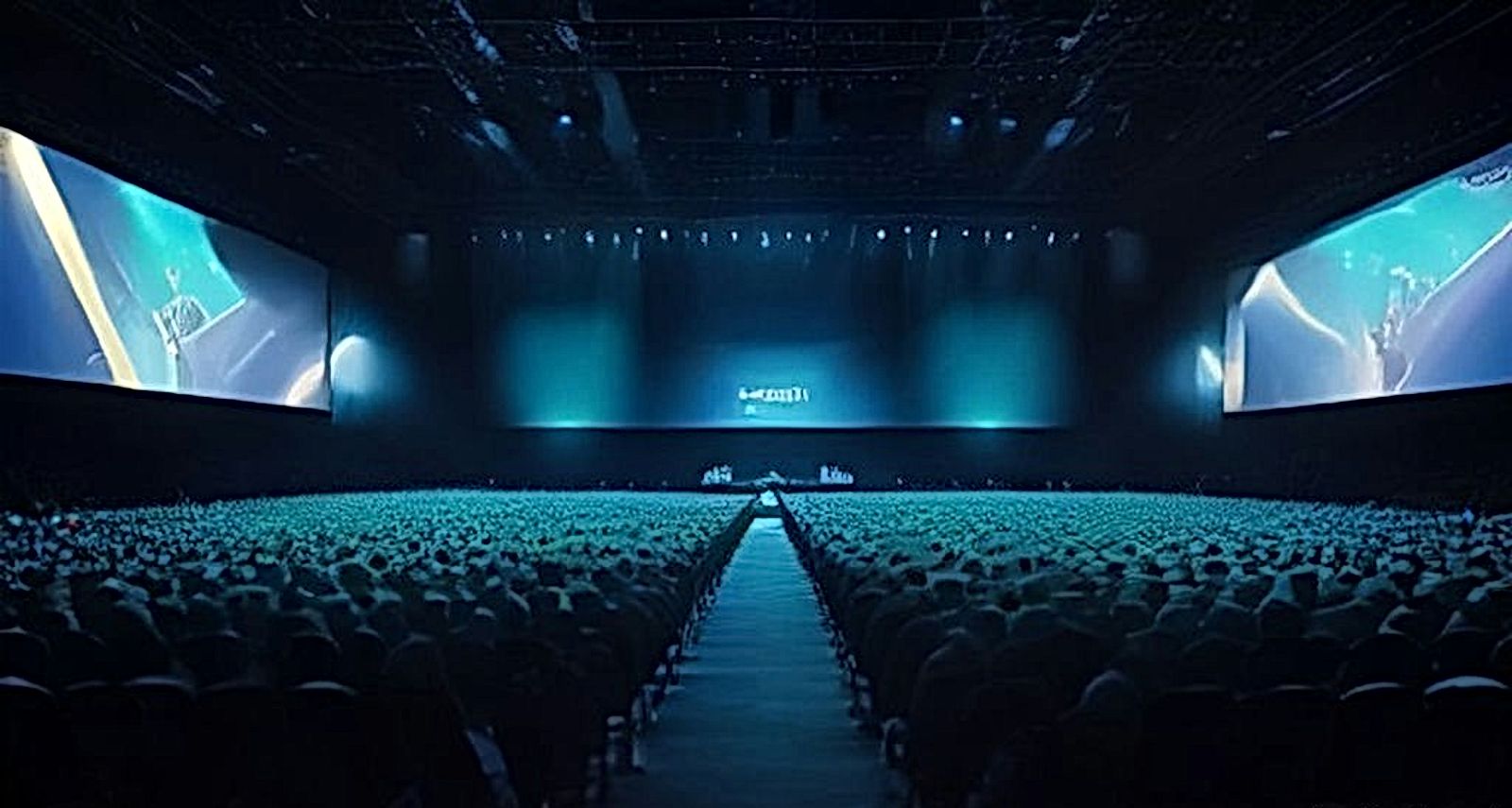
Binance Blockchain Week day 1 opened in Bangkok on Saturday under the theme The Evolution of Capital, and the running order is more interesting than any single session on it. The first morning belongs to Richard Teng, Binance’s co-CEO, framing how digital finance reaches the next three billion users. By midday the main stage belongs to BlackRock, Nasdaq and Franklin Templeton, arguing over who trades a tokenised world. Wedged between them sit a deputy governor of Kazakhstan’s central bank, Bhutan’s DK Bank, Japan’s PayPay, the Royal Thai Police and three chain-analytics vendors. Six years ago that would have been three unrelated conferences.
The event runs 28 and 29 November at the Queen Sirikit National Convention Center, the Asia edition of Binance’s annual gathering, hosted in partnership with Binance TH. Both days are streamed on Binance Square. This is a day-one read, not a stage report: it covers what is confirmed on the programme and what is still unverified, because at the time of writing the day is mid-session and no commercial announcement from the main stage has been verifiable.
Binance Blockchain Week day 1 at a glance
- Dates: 28-29 November 2026, Saturday and Sunday
- Venue: Queen Sirikit National Convention Center, Bangkok, Thailand (UTC+7)
- Day one theme: The Evolution of Capital
- Day two theme: What Becomes Possible
- Host: Binance, with Binance TH as local partner; campaign tag #EvolveAtBinanceBlockchainWeek
- Access: tickets reported sold out; main stage streamed live on Binance Square
What day one actually has on the programme
The opening keynote. Richard Teng, co-CEO, on how digital finance has to evolve to reach the next three billion users. That framing has been Binance’s register all year: retail reach first, institutional plumbing second.
The new financial capitals. A morning panel pairing officials from Kazakhstan, Bhutan and Ghana on how emerging digital-finance hubs write their own rulebooks, followed by a payments session with the National Bank of Kazakhstan’s deputy governor, PayPay of Japan and DK Bank of Bhutan. Three jurisdictions, three very different regulatory bets, one hour.
Tokenisation, twice. First a session asking who will actually trade tokenised assets once everything is tokenised, then a second on whether Wall Street reshapes crypto or the reverse. BlackRock, Nasdaq and Franklin Templeton are all in the room for it, which is the difference between this year’s panel and the 2022 version.
Security and compliance, side by side. Binance, Elliptic and the Royal Thai Police on collective cyber defence; TRM Labs, Chainalysis and Solidus Labs on compliance for borderless transactions. Putting a national police force on the same stage as the vendors that sell tracing software is a statement about how enforcement work is now expected to run.
Markets and stablecoins. FTSE Russell, CSOP, DBS Bank, KGI Financial and Ondo Finance on next-generation investment products, then Tether, Visa and Celo with Thailand’s Korn Chatikavanij asking whether stablecoins are the future of payments or merely the rails underneath them. That last question is the most consequential of the day and the least likely to get a straight answer.
The close. Matthew Roszak of Bloq on what he calls the next billion-dollar bet.
Why the line-up matters more than any single panel
Conference agendas are usually a lagging indicator: they show you what the industry was excited about eighteen months ago. This one is closer to a leading one, and the tell is the seating chart. The people who write rules, the people who run payment rails and the people who allocate capital are being asked to share a stage in the same afternoon, in a jurisdiction that has been unusually deliberate about which of the three it wants to attract.
The stablecoin session is where that tension is sharpest. Tether and Visa on the same panel is not a fireside chat, it is a negotiation about who captures the float and who becomes a commodity. Add Celo to the mix and you get the on-chain rails argument underneath it. Meanwhile the compliance panel and the police panel say, fairly plainly, that the industry has stopped treating enforcement as an externality to be managed and started treating it as a product category.
The absence of a verifiable product launch on day one is itself worth noting. In previous cycles a flagship event was where Binance dropped an exchange feature and the market repriced the token by Monday. This programme is built around panels, not announcements, which matches the read from our preview earlier this week: the questions this event has to answer are about security, Europe and tokenisation graduating from pilot, and none of them get answered by a slide.
What we cannot yet confirm
Three limits, stated plainly rather than buried.
First, the session list above is drawn from Binance’s own agenda summary and corroborated event listings. The official agenda page is JavaScript-rendered and returned navigation-level content when fetched, and several Binance Square posts carrying the richest day-one detail returned 403 to automated requests. So treat session order as reported rather than officially confirmed, and expect times to shift.
Second, no confirmed start time for the opening keynote has been published in a form we could verify. All times referenced here are Bangkok local time on the understanding that the day runs from morning to evening.
Third, the attendance figure circulating – roughly 7,500 attendees and 135 exhibiting companies, with tickets sold out – comes from a community post about the sell-out, not from an official Binance statement. It is plausible for a venue of that size and it is not verified. We would rather flag it than launder it into a fact. We are also not quoting Teng’s remarks: no verifiable transcript exists yet, and inventing a keynote is not reporting.
Day two: a platform claim, an AI debate and a $100,000 trade
Sunday’s theme is What Becomes Possible, and it opens with Yi He, Binance’s other co-CEO, on All Finance on Binance, followed by a product keynote tracing the company’s move from crypto exchange to something broader. That is a scope claim dressed as a title, and it is the single line to watch across both days: an exchange saying it intends to be the venue for all finance is a different business from an exchange saying it lists more tokens.
Around it: a session on pre-IPO perpetual contracts drawing on research from Kaiko, DeFiLlama, CoinDesk and CoinMarketCap; a straight debate on whether most financial trades will be executed by AI agents within five years; agentic AI in practice; UNICEF, Prosper Global and Fortune Credit on blockchain for humanitarian aid; Alibaba Cloud, Google Cloud, Ledger and Kite on who shapes the digital economy; and Animoca Brands, YZi Labs and Lumia on ownership as the next capital frontier. Ella Zhang of YZi Labs closes, and the Blockchain 100 Awards and the Binance Trading Master Tournament, with its $100,000 prize, are streamed alongside the main stage.
Also on site on day one and around the venue: an Aster Open Qualifier running through the late morning with twenty traders in a two-round qualifier, a Predict Night co-hosted by Binance Wallet from early evening, and booths from TRON’s ecosystem and B.AI. Side events rarely move markets, but they are where the actual deal conversations happen, and this year there are more of them than main-stage hours.
What to watch
Three things, in order. Whether Teng’s keynote sets a number, a market or a date rather than a narrative. Whether anyone on the stablecoin panel will say out loud what the float argument implies for the banks in the room. And whether day two’s All Finance on Binance line arrives with anything a user can actually touch on Monday.
Tomorrow we will write the stage report, from what is said rather than what was scheduled. If nothing is said, we will say that too.
